
Track your progress
To save this lesson to your Academy progress, join the free TradersLink Discord and log in with your Discord account.
Log in with DiscordGap Fill
A gap fill happens when price moves back into the empty space between the new session open and the prior session close.
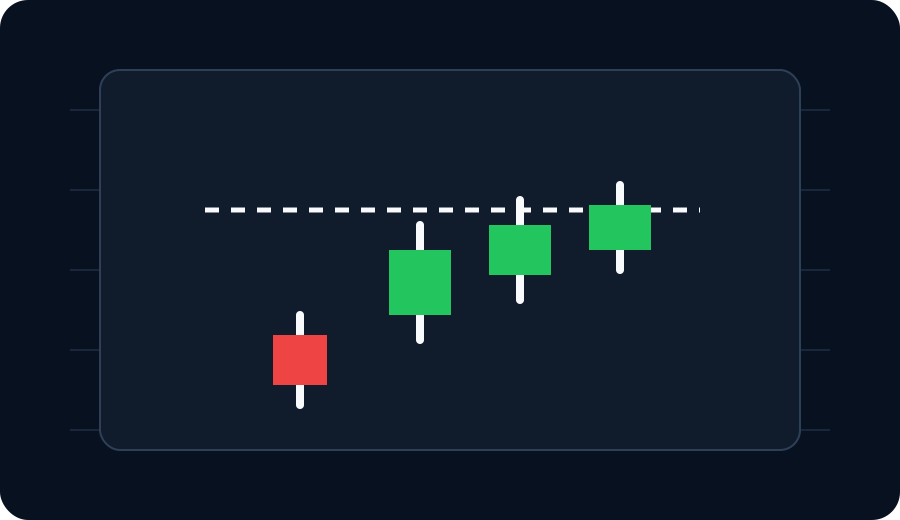
At A Glance
- Name: Gap Fill
- Category: Session And Gap Behavior
- Type: Session Reversion
- Number of candles: Session sequence
- Typical context: After a gap when price moves back toward the prior close.
How To Identify It
- Gap space: Price moves back into the space between the current open and prior close.
- Reference area: The prior close is the main destination area to watch.
- Relationship: The current session starts away from the prior close, then moves back into that space.
Find the prior close and the current session open. A gap fill begins when price moves back through that gap area instead of holding the opening side.
Context
Gap fill behavior depends on the prior close, the opening price, and how much of the gap area price retraces.
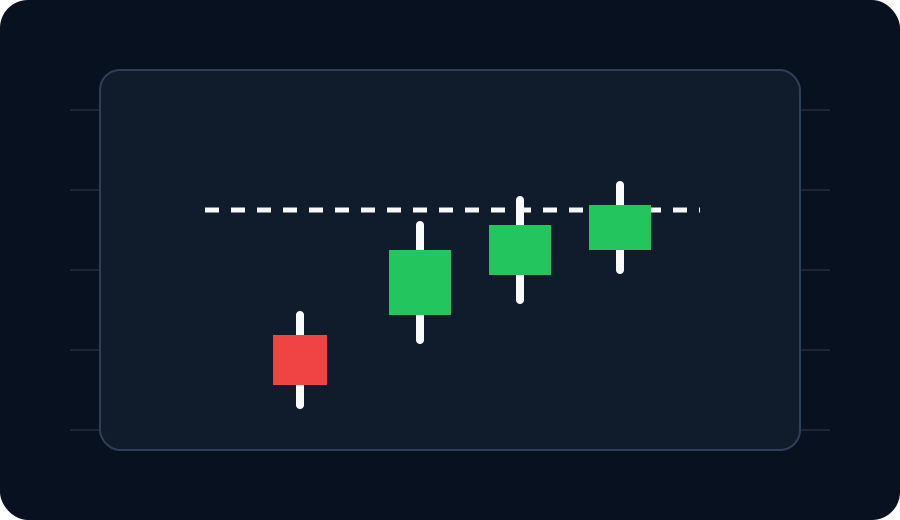
Gap fills often matter when the opening move cannot hold, when price opens into resistance or support, or when premarket levels fail. Not every gap fills, so the reference levels matter.
What It Shows
A gap fill shows that the market is taking back the opening repricing. Traders who expected the gap to hold may be forced to adjust as price moves back toward the prior close.
What To Watch Next
Watch whether price moves cleanly through the gap or stalls at the prior close, previous day high or low, or premarket levels. Those references can slow or reverse the fill.
The read weakens if price holds the opening side and refuses to move into the gap. That means the gap is still being defended.
Common Confusion
A gap fill can be partial. It does not have to return all the way to the prior close to be worth studying.
Key Takeaway
A gap fill shows price moving back into the gap area. The prior close and nearby session levels are the main references.
Related Lessons
- Gap And Go
- Exhaustion Gap
- Session And Gap Behavior
- Candlestick Basics