
Track your progress
To save this lesson to your Academy progress, join the free TradersLink Discord and log in with your Discord account.
Log in with DiscordParabolic Move
Best suited for: intraday trading and short-term momentum review.
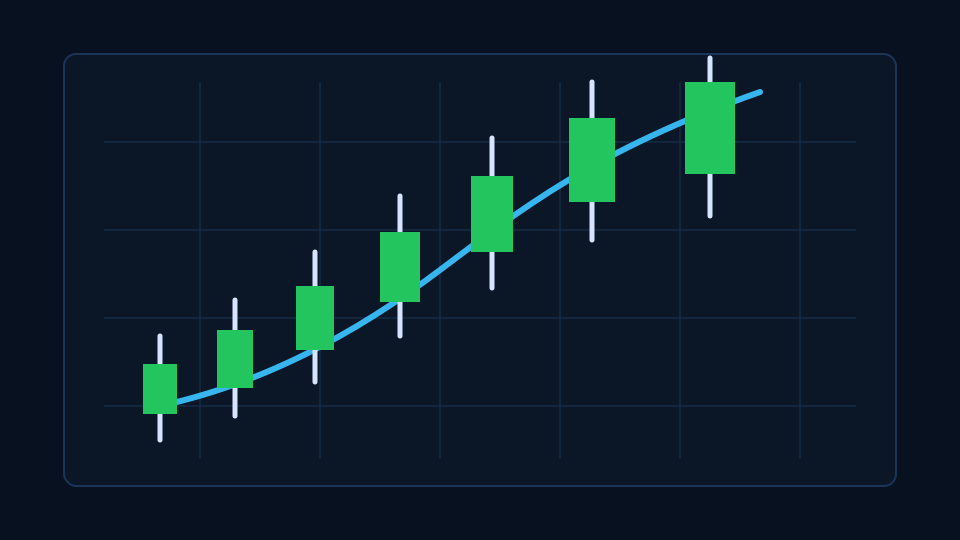
A parabolic move happens when price accelerates sharply away from prior structure. The candles often get steeper and faster as traders chase the move.
The pattern is about speed and extension. The farther price gets from clean support or consolidation, the more important it becomes to watch where momentum starts to stall.
What It Is
A parabolic move is an accelerating price move where each push becomes faster and farther from nearby structure.
- Increasing candle range or speed.
- Price stretching away from support or VWAP.
- High attention and emotional pressure.
- Possible halt or liquidity risk in small caps.
- Sharp reversal or failed continuation risk.
Review the rate of acceleration, distance from support, volume behavior, and the first area where price stops holding clean pullbacks.
Pattern Structure
The pattern shows acceleration and extension, which usually makes risk harder to define.
- Increasing candle range or speed.
- Price stretching away from support or VWAP.
- High attention and emotional pressure.
- Possible halt or liquidity risk in small caps.
- Sharp reversal or failed continuation risk.
Context That Matters
Parabolic moves matter most when price is extended, crowded, and moving faster than the earlier trend.
- Support and resistance quality.
- Trend before the pattern.
- Volume during formation and attempted break.
- Distance from invalidation.
- Liquidity, spread, and slippage.
- Catalyst, filing, or market context where relevant.
When It Can Mislead
Parabolic moves mislead because speed can feel like certainty while risk distance is expanding.
Example Chart Read
A stock starts with controlled momentum, then candles become larger and farther from support. The useful read is whether the entry came from a structured setup or from chasing after acceleration.
Common Mistakes
One common mistake is seeing the pattern before it is actually formed.
Another mistake is entering late after the clean risk area has passed.
Traders also make mistakes when they ignore volume and nearby levels.
Another mistake is holding after the pattern fails.
A final mistake is using the pattern label to justify a reactive trade.
Related Lessons
- Chasing Stocks
- Momentum Trading
- ATR
- High Of Day
- Risk Management
Key Takeaway
A parabolic move is mainly a risk and extension lesson. Fast movement can attract attention, but distance from structure can make risk harder to control.
FAQ
What is Parabolic Move?
A parabolic move is an accelerating price move where each push becomes faster and farther from nearby structure.
What changes a parabolic read?
The read changes when price stops accelerating, loses the steep trend, or starts failing to hold higher support areas.
What context matters most?
Levels, trend, volume, liquidity, risk, and follow-through matter most.
Why do these trades fail?
They often fail because entries are late, volume fades, a key level fails, or the pattern was forced.
How should it be reviewed?
Review pattern quality, entry timing, volume, level behavior, invalidation, and whether the plan was followed.
What should this pattern be compared with?
Compare it with extension from VWAP or support, volume climax behavior, pullback quality, and whether the move is still orderly.