
Track your progress
To save this lesson to your Academy progress, join the free TradersLink Discord and log in with your Discord account.
Log in with DiscordNew High of Day: How Traders Read Fresh Session Highs
New high of day means price has traded above the previous highest price of the current session.
Traders often shorten it to NHOD.
The difference between HOD and NHOD matters:
- High of day is the current session high level.
- New high of day is the event of price breaking above that level.
If high of day is $3.45 and price trades at $3.51, price has made a new high of day.
This can attract attention because a fresh session high may show momentum. It can also create emotional entries because scanner alerts make the move feel urgent.
The useful question is:
Was the new high of day part of a clean setup, or did the trader react to the alert after the best location had already passed?
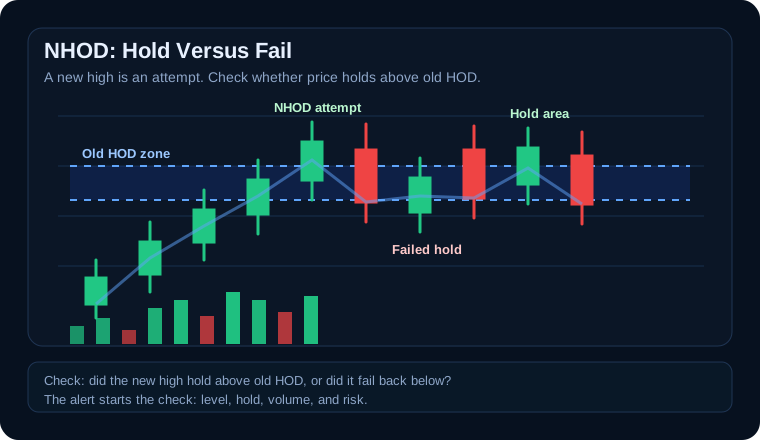
What New High Of Day Means
New high of day happens when price breaks above the current session high.
For example:
- A stock opens at $2.10.
- It runs to $2.60.
- $2.60 becomes high of day.
- Price pulls back to $2.42.
- Later, price trades at $2.66.
- That move creates a new high of day.
The new high is an event. It tells the trader that price has moved into a fresh intraday high.
It does not tell the trader whether the move is clean, extended, crowded, or likely to fail. That part comes from the chart read.
Why Traders Watch NHOD Alerts
Many scanners alert when a stock makes a new high of day.
That can be useful because it helps traders notice active stocks making fresh intraday highs.
But an alert is only information.
It does not show the full setup by itself. The trader still needs to check the chart.
Useful questions after an NHOD alert include:
- What level did price just break?
- Was price building structure below the high?
- Did volume expand on the new high?
- Is price extended from support or the latest higher low?
- Is premarket high, previous day high, or daily resistance nearby?
- Did price hold above the old high or fail back below it?
The alert should send the trader to the chart. It should not make the decision.
HOD Is The Level, NHOD Is The Break
This is the simplest way to remember it.
High of day is the level price has to clear.
New high of day is what happens when price clears it.
For example:
- HOD is $4.20.
- Price pushes to $4.25.
- The stock just made a new high of day.
The next question is what price does after the break.
Does it hold above $4.20? Does it fail back below? Does it retest the old high? Does volume fade? Does price run into another resistance level?
The event matters, but the follow-through matters more.
A Cleaner New High Of Day
A cleaner NHOD usually has structure before the break.
Price may pull back, hold a higher low, consolidate under HOD, or build pressure before breaking the level.
A cleaner NHOD read may show:
- HOD was clear before the break.
- Price built higher lows below the level.
- Volume increased as price made the new high.
- The spread stayed manageable.
- Price held above the old HOD after the break.
- Nearby resistance was not directly overhead.
This gives the new high a better story than a random spike.
A trader should be able to explain what made the new high worth watching before the alert fired.
New High Of Day That Fails
A failed NHOD happens when price breaks above the old high of day but cannot stay above it.
It may spike above the level, attract late entries, then fall back below the same area.
A failed NHOD may show:
- Price breaks above HOD.
- Volume fades after the alert.
- Price falls back below the old HOD.
- The next candles cannot reclaim the level.
- The move becomes a failed breakout area.
This is why the old high matters. It gives the trader a line to compare against after the alert.
A fresh high that cannot hold above the old high is very different from one that breaks, holds, and builds.
Repeated New Highs And Chase Risk
Repeated new highs can look strong, but they can also become extended.
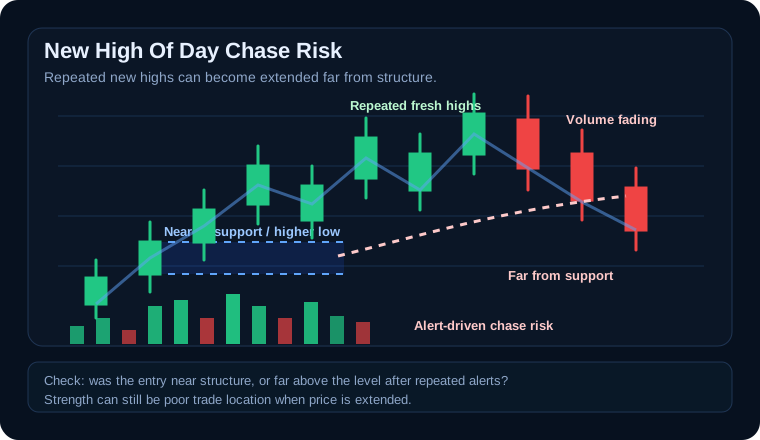
A stock may keep making fresh highs while moving farther away from support. That can make the chart exciting, but it can also make entries harder to manage.
Chase risk can show up when:
- Price has already made several NHOD pushes.
- Each push has less volume than the last.
- Price is far above the nearest higher low.
- The spread is widening.
- The next higher-timeframe resistance is close.
- The trader is reacting to alerts instead of reading location.
A strong chart can still be a poor late entry if price is too far from structure.
Realistic Example
A stock runs from $2.10 to $2.60.
It pulls back to $2.42, holds that area, and starts building higher lows under $2.60. Volume begins increasing as price returns to the high.
Then price breaks $2.60 and trades to $2.68, creating a new high of day.
A cleaner NHOD read might show:
- Price built higher lows under the old HOD.
- Volume expanded on the break.
- Price held above $2.60 after the alert.
- The entry was close enough to the level to understand risk.
- There was not a major resistance level directly overhead.
A weaker NHOD read might show:
- Price spiked above $2.60 from nowhere.
- The alert fired after a vertical candle.
- Volume faded after the new high.
- Price quickly fell back below $2.60.
- The trader entered because the alert felt urgent.
Both examples include a new high of day. Only one has cleaner structure.
NHOD With Premarket High And Previous Day High
New high of day should be read with nearby reference levels.
If the new high of day happens directly under premarket high, previous day high, or daily resistance, the move may have less room than it first appears.
For example:
- Old HOD is $5.00.
- Price makes NHOD at $5.05.
- Premarket high is $5.08.
- Previous day high is $5.12.
A trader should recognize that the NHOD is happening inside a cluster of important levels.
That does not mean price cannot break through. It means the level map matters before reacting to the alert.
What Beginners Usually Get Wrong
The biggest mistake is treating an NHOD alert like a complete trade idea.
It is not.
Common mistakes include:
- Chasing every NHOD alert
- Ignoring whether price built structure below the high
- Ignoring volume after the new high
- Ignoring how far price is from support
- Ignoring PMH, PDH, or daily resistance nearby
- Entering after several repeated new highs
- Holding after price falls back below the old HOD
- Increasing size because the alert feels exciting
An NHOD alert should make the trader look at the chart, not skip the chart.
What To Watch After NHOD
After price makes a new high of day, watch whether it can keep the level.
Ask:
- What was the old HOD?
- Did price build structure below it?
- Did volume expand on the new high?
- Did price hold above the old HOD?
- Did price fail back below the old HOD?
- Is price extended from support or the latest higher low?
- Is another major level close above?
- Did the trader plan the level before the alert?
The new high is the event. The behavior after the event tells the story.
How This Helps When Studying Charts Or Trades
NHOD lessons help traders study whether they planned a momentum idea or reacted to an alert.
When looking back at a chart or completed trade, ask:
- Where was HOD before the alert?
- Was price building under that level?
- Did the new high hold or fail?
- Was the entry near the old HOD or far above it?
- Was price already extended?
- Were other resistance levels nearby?
- Did the trader respond when the old HOD failed?
This keeps the lesson practical. The goal is not to avoid every new high. The goal is to know whether the new high had structure behind it.
Key Takeaway
New high of day is the event of price breaking above the current session high.
It can show momentum, but it can also create alert-driven chasing. The important part is whether price had structure before the break, volume during the move, and the ability to hold above the old high afterward.
Do not trade the alert alone. Read the chart behind it.
Related Lessons
FAQ
What does new high of day mean?
New high of day means price has traded above the previous highest price of the current session.
What does NHOD mean?
NHOD stands for new high of day.
How is HOD different from NHOD?
HOD is the current session high level. NHOD is the event of price breaking above that level.
Why do traders watch NHOD alerts?
Traders watch NHOD alerts because they can show stocks making fresh intraday highs and attracting momentum attention.
What is a failed new high of day?
A failed new high of day happens when price breaks above the old session high but cannot hold above it and falls back below the level.
What should beginners check after an NHOD alert?
Beginners should check structure, volume, nearby resistance, distance from support, and whether price holds above the old high of day.