
Track your progress
To save this lesson to your Academy progress, join the free TradersLink Discord and log in with your Discord account.
Log in with DiscordRed-To-Green Move
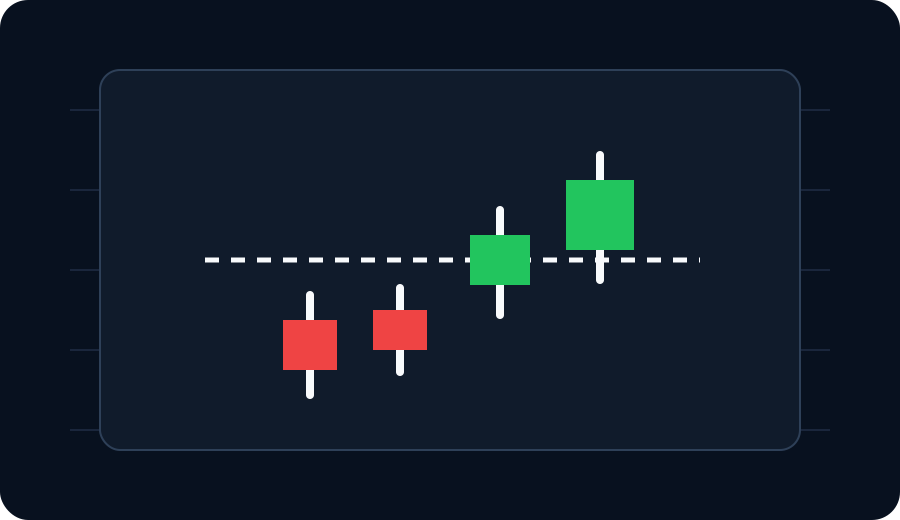
A red-to-green move happens when price starts below a session reference and then moves back above it. In stocks, that reference is often the prior close or the current session open.
At A Glance
- Name: Red-To-Green Move
- Category: Session And Gap Behavior
- Type: Session Shift
- Number of candles: Session sequence
- Typical context: Intraday move from below a session reference to above it.
How To Identify It
- Starting location: Price trades below the reference area first.
- Reclaim: Price crosses back above the reference and starts holding above it.
- Reference levels: The sequence needs a clear prior close, session open, VWAP, or premarket level.
Start with the reference line. Price should trade below it first, then cross back above it and begin holding above that area instead of immediately fading.
Context
Red-to-green behavior is session context, not a single candlestick pattern.
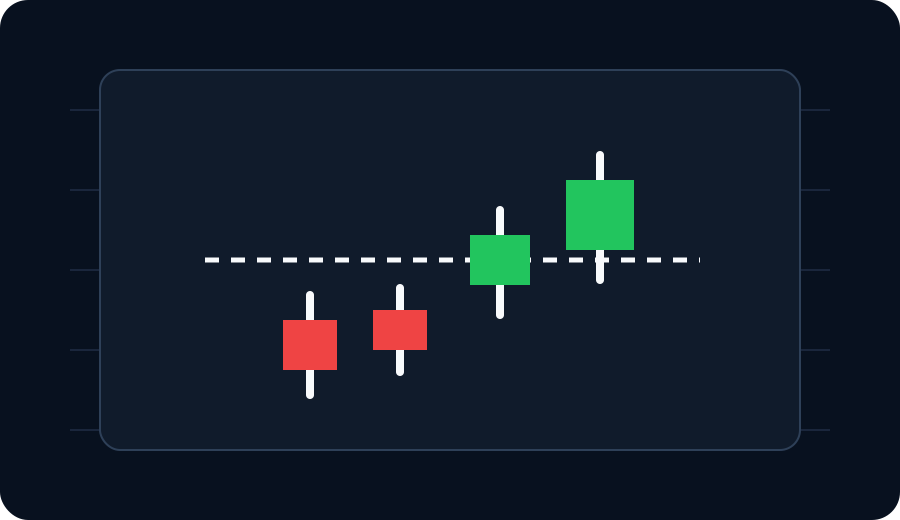
Red-to-green behavior matters most when the reference is clear, such as the prior close, open, VWAP, or premarket level. It is cleaner when the reclaim happens with volume and does not run straight into resistance.
What It Shows
The move shows a session shift. Sellers had price red against the reference, then buyers reclaimed it and changed the intraday tone.
What To Watch Next
Watch whether price holds above the reference after crossing it. A clean red-to-green move should keep the reclaimed level from turning into chop.
The read weakens if price crosses up and immediately falls back below the reference. That means the session shift did not hold.
Common Confusion
Red-to-green is not a candle shape. It is a sequence around a session reference.
Key Takeaway
A red-to-green move is session behavior, not a single candle. It shows price reclaiming an important reference after starting below it.
Related Lessons
- Exhaustion Gap
- Green-To-Red Move
- Session And Gap Behavior
- Candlestick Basics