
Track your progress
To save this lesson to your Academy progress, join the free TradersLink Discord and log in with your Discord account.
Log in with DiscordCandlestick Basics: How Candles Work
A candlestick is a compact way to show how price moved during one period of time.
On a one-minute chart, each candle shows one minute of trading. On a five-minute chart, each candle shows five minutes. On a daily chart, each candle shows one trading day.
The candle does not only show where price ended. It shows where price opened, how high it traded, how low it traded, and where it closed.
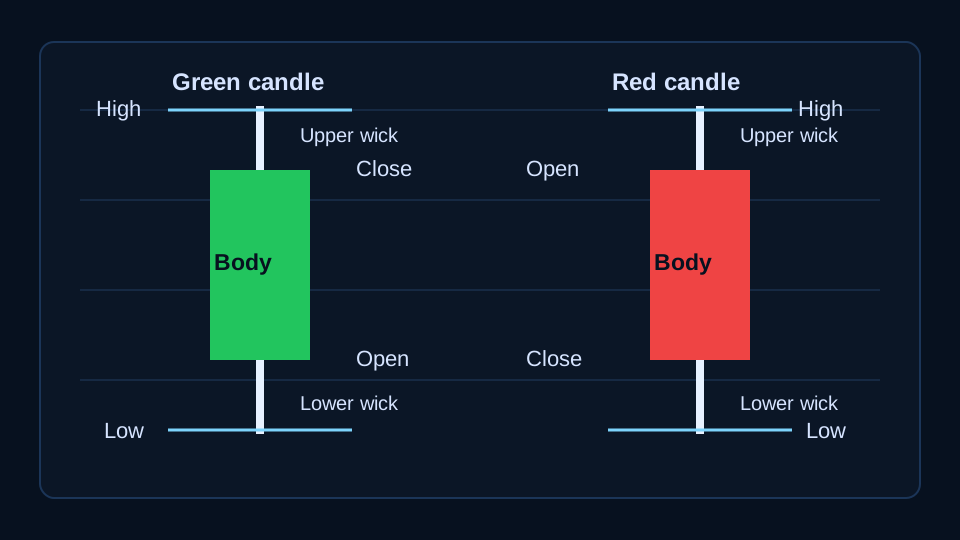
Open, High, Low, And Close
Every candle is built from four prices:
- Open: where price started during that candle period.
- High: the highest price reached during the candle.
- Low: the lowest price reached during the candle.
- Close: where price finished when the candle period ended.
Those four prices are often called OHLC.
The open and close create the candle body. The high and low create the full candle range.
The Candle Body
The body is the thick part of the candle.
It shows the distance between the open and the close. A large body means price moved a meaningful distance from open to close. A small body means price opened and closed close together.
The body is one of the first things to read because it shows how much progress price made during that candle.
Green Candles And Red Candles
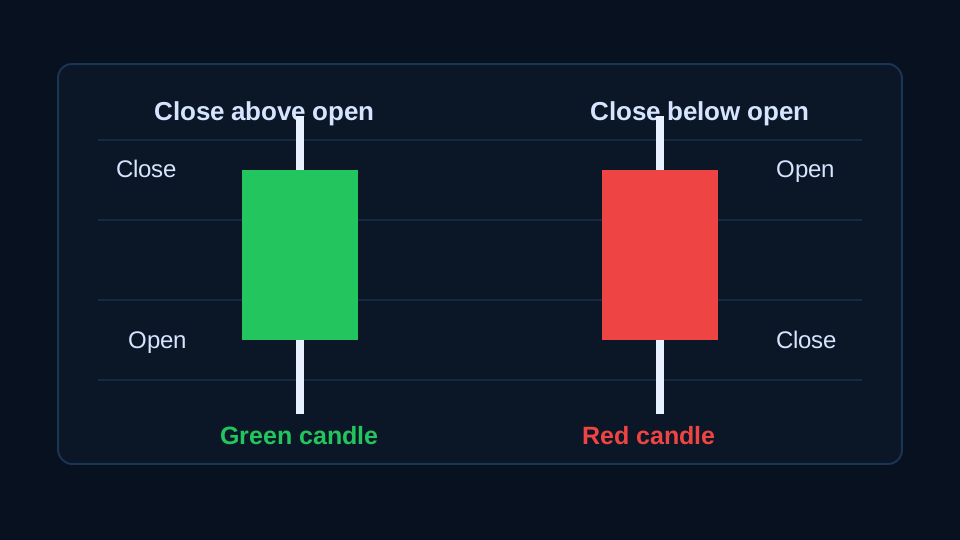
Most charts use green and red candle bodies.
- A green candle closes above where it opened.
- A red candle closes below where it opened.
Green does not mean the entire candle only moved up. Red does not mean the entire candle only moved down. Price can move both directions inside the same candle before it closes.
Upper Wick And Lower Wick
The thin lines above and below the body are called wicks or shadows.
The upper wick shows how far price traded above the body before closing back lower. The lower wick shows how far price traded below the body before closing back higher.
Wicks matter because they show movement that did not fully hold into the close.
A long upper wick means price pushed higher during the candle, but it did not close near the high. A long lower wick means price pushed lower during the candle, but it did not close near the low.
Body Size
Body size helps describe the pressure inside the candle.
A large green body shows buyers made progress from open to close. A large red body shows sellers made progress from open to close.
A small body means the open and close were close together. That can happen when buyers and sellers were more balanced, when momentum slowed, or when price moved both ways but finished near where it started.
Body size matters more when it is compared with nearby candles. A body that looks large in one chart may be normal in another chart.
Wick Size
Wick size helps show where price was rejected or where the candle became less clean.
A long wick does not automatically make a candle bullish or bearish. The location of the wick matters.
For example, a long lower wick near a support area can show that sellers pushed price down and buyers brought it back up. A long upper wick near resistance can show that buyers pushed price up and sellers brought it back down.
The wick shows the attempt. The close shows how much of that attempt held.
How A Candle Forms
A candle is not final until the period closes.
While the candle is forming, the body and wicks can keep changing. A candle that looks strong halfway through its period can close weak. A candle that looks weak early can recover before the close.
That is why the close matters. The close locks in the final candle shape for that period.
Why Context Matters
A candle shape is only the first layer.
The second layer is location. The same candle near support, near resistance, in the middle of a range, after a gap, or after a long run can carry a different message.
Start with the candle itself:
- What color is the body?
- How large is the body?
- Where are the wicks?
- Where did the candle close inside its range?
- Is the candle larger, smaller, cleaner, or messier than nearby candles?
Then add context:
- Did it happen near support?
- Did it happen near resistance?
- Did it happen after a push higher or lower?
- Did it happen during a gap, open, range, breakout, or breakdown?
- Did the next candle respect or erase the candle's key area?
How To Use The Candle Lessons
After you understand candle anatomy, the named candle lessons become easier to read.
The individual candle lessons are grouped by behavior:
- Bullish Candle Patterns
- Bearish Candle Patterns
- Indecision And Neutral Candles
- Momentum And Continuation Candles
- Session And Gap Behavior
Each named lesson builds on the same basic parts: body, wick, open, close, high, low, and location.
Key Takeaway
Candles show price behavior during a period of time.
The body shows the move from open to close. The wicks show the high and low that did not fully hold. The close locks in the final shape.
Before memorizing candle names, learn to read the candle parts.