
Track your progress
To save this lesson to your Academy progress, join the free TradersLink Discord and log in with your Discord account.
Log in with DiscordSupport Levels: How Traders Read Price Holding An Area
A support level is an area where price has held before.
It may be a prior low, the bottom of a range, a premarket low, a previous day low, or a former resistance area that price broke above and later came back to test.
The key idea is simple: support is an area where selling pressure slowed down before and buyers were strong enough to create a reaction.
That does not mean support has to hold again. It means the area is worth watching because price has already shown that traders cared about it.
Support is useful because it helps answer three basic questions:
- Where is price compared with a prior demand area?
- Is the support reaction getting stronger or weaker?
- Where does the chart start to change if support fails?
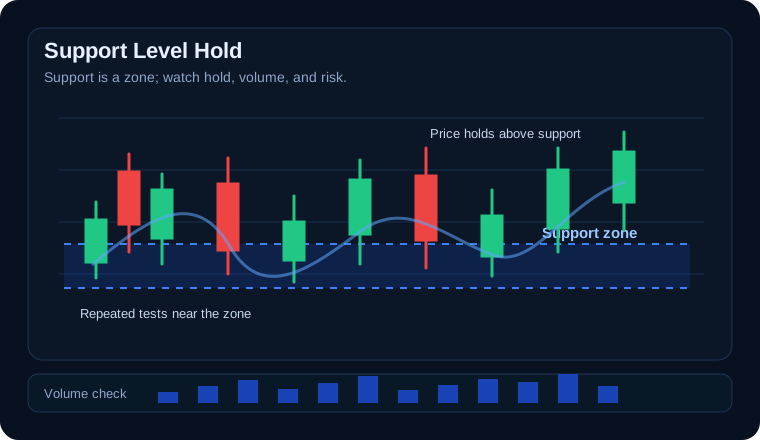
What A Support Level Shows
Support shows that price found interest around an area before.
Sometimes that interest comes from buyers stepping in. Sometimes it comes from sellers taking profits. Sometimes it comes from short sellers covering. Sometimes it comes from traders watching the same prior low or range bottom.
You do not need to know every reason behind the reaction. The first job is to recognize that price reacted there.
A support level can come from:
- A prior intraday low
- Premarket low
- Previous day low
- Low of day
- A pullback low
- The bottom of a consolidation range
- A major swing low
- A former resistance area that later held as support
- A daily chart reaction area
Support becomes more useful when it is clear before the decision, not only obvious after the move.
Support Is Not Just A Bounce Area
Many beginners think of support as a place where price is supposed to bounce.
That is too simple.
A support level can do several things:
- Price can bounce cleanly.
- Price can pause and move sideways.
- Price can test the area again and again.
- Price can break below it.
- Price can break below it and reclaim it.
- Price can lose the level and later reject from underneath.
The reaction is the important part.
When price reaches support, the lesson is not “buy support.” The lesson is to watch how price behaves there. Does the level attract demand? Does the bounce get weaker? Does price break and recover? Does old support become a problem later?
A Clean Support Hold
A cleaner support hold usually has a few things going for it.
Price reaches an area that was already visible. The reaction is clear. The bounce does not need to be dramatic, but it should show that the area mattered. Ideally, the trader can also see where the support idea starts to fail.
For example, imagine a stock pushes from $2.10 to $2.80, then pulls back and holds the $2.48 to $2.52 area three times. Each time price reaches that zone, sellers fail to push much lower.
That area may become support.
A beginner should ask:
- Was the support area visible before the bounce?
- Did price hold the same general zone more than once?
- Were the bounces getting stronger or weaker?
- Was volume meaningful around the level?
- Was the spread clean enough to trust the reaction?
- What would make the support idea wrong?
A support hold is easier to work with when the failure area is clear. If the trader cannot explain where support stops being support, the level may not be useful enough.
Weak Support
Not every support reaction is strong.
Sometimes price reaches support and bounces only a little. Then it comes back again. Then the next bounce is even weaker. That can show that demand is fading.
Weak support may show up as:
- Smaller bounces after each test
- Lower highs pressing into support
- Volume fading on each bounce
- More time spent sitting on the level
- Wider spreads or thinner liquidity
- A failed reclaim after price dips below support
Weak support does not automatically mean price will collapse. It simply means the level is not acting as strongly as it did before.
This is an important beginner lesson. A stock can still be “at support” while the chart is getting weaker.
When Support Breaks
A support break happens when price moves below a support area and cannot quickly recover it.
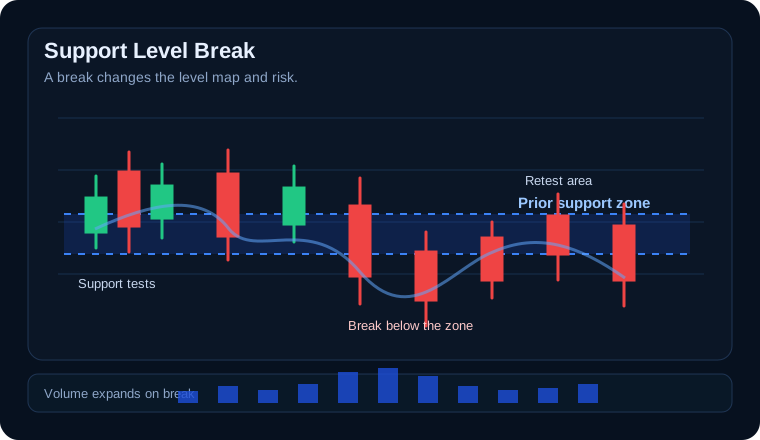
The break matters because the area that used to hold price is no longer behaving the same way.
After support breaks, a trader should look at what happens next:
- Does price reclaim the level quickly?
- Does price stay below the support zone?
- Does volume increase during the break?
- Does the old support area become resistance on a retest?
- Were lower highs already pressing into the level before the break?
A support break can change the chart. If a trade idea depended on support holding, the break is important information.
The mistake beginners often make is treating a broken support level as if it is still working. Once support fails, the chart needs a fresh read.
When Support Reclaims
A support reclaim happens when price breaks below support, then moves back above that area and holds.
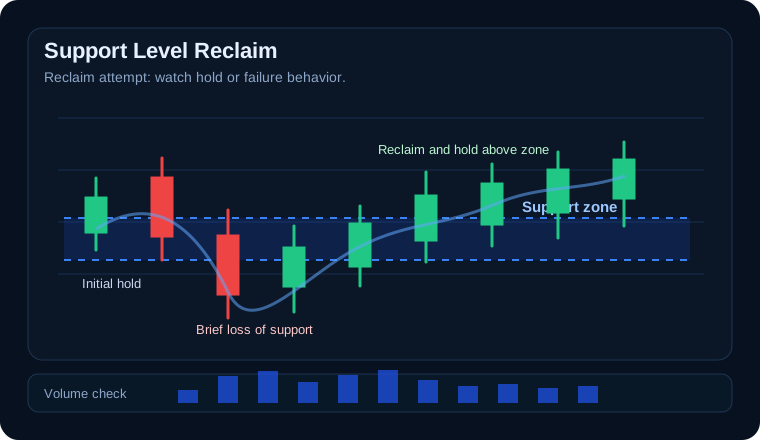
A reclaim can show that the first break did not fully take control. It can also trap traders who reacted too quickly to the breakdown.
The useful question is not just whether price moved back above support. The useful question is whether it can stay there.
A cleaner reclaim usually has:
- A clear support area before the break
- A break below support
- A move back above the level
- Some evidence that price is holding the reclaimed area
- A clear area where the reclaim idea would fail
If price reclaims support for one candle and then immediately loses it again, the reclaim may not mean much.
Support Becoming Resistance
Broken support can later become resistance.
This happens when price loses a support area, trades below it, then tries to return to that same area from underneath. Traders who expected support to hold may sell into the retest. Other traders may now view the old support zone as a place where price has to prove itself.
For example, if $4.00 was support all morning and price breaks below it, a later move back into $4.00 may become a test. If price rejects there, the old support is now acting more like resistance.
This is why support breaks matter. The level does not disappear. Its role can change.
Realistic Example
A stock gaps up after news and opens near $3.00. It pulls back to $2.72, bounces to $3.10, then later pulls back to $2.74 and bounces again.
A trader may mark $2.72 to $2.75 as support.
Later, price comes back to that area for a third test. This is where the chart becomes more interesting.
A strong support read might show:
- Price holds the same zone.
- Sellers cannot push lower.
- Volume improves on the bounce.
- Price starts making higher lows after the test.
A weak support read might show:
- Each bounce gets smaller.
- Lower highs are forming above support.
- Volume dries up on bounces.
- Price sits on the level too long.
- The level breaks and cannot reclaim.
The support label is not enough. The behavior around the level is what matters.
Day Trading Versus Swing Trading Context
Support levels matter in both day trading and swing trading, but the source of the support may be different.
A day trader may watch:
- Premarket low
- Low of day
- Previous day low
- Opening range low
- VWAP area
- Intraday pullback lows
- Former intraday resistance that becomes support
A swing trader may watch:
- Daily chart support
- Multi-day pullback lows
- Prior breakout zones
- Larger consolidation lows
- Weekly support areas
- Gap support areas
The same principle applies: price has reacted there before, so the area may matter again.
The difference is the timeframe. A level that matters for a five-minute day trade may not matter much for a multi-day swing. A daily support area may matter even if the intraday chart looks noisy.
What Beginners Usually Get Wrong
The biggest mistake is treating support like a promise.
Support is not a promise. It is an area to watch.
Common mistakes include:
- Buying just because price reached support
- Averaging down after support breaks
- Moving the support level lower after entry
- Ignoring lower highs pressing into the level
- Treating a weak pause as strong demand
- Ignoring volume and liquidity
- Forgetting that broken support can become resistance
- Using old support from the wrong timeframe
- Holding because price is “near support” even after the original plan failed
A support level should make the chart easier to understand. It should not become an excuse to stay in a bad idea.
What To Watch At Support
When price reaches support, focus on the reaction.
Ask:
- Did price bounce cleanly or barely react?
- Are bounces getting stronger or weaker?
- Is volume increasing or fading?
- Are lower highs pressing into the level?
- Did price break below and reclaim?
- Did price break below and stay below?
- Is the support area still relevant on the timeframe being traded?
The more clearly price reacts, the more useful the level becomes. The messier the reaction, the more careful a trader should be about giving the level too much weight.
How This Helps When Studying Charts Or Trades
Support levels help traders study whether a decision happened in a good location.
A trade taken near a planned support area is different from a trade taken in the middle of a range. A loss after support breaks is different from a loss where the trader had no level at all. A bounce from support is different from a weak pause that only looked like support after the fact.
When looking back at a chart or completed trade, ask:
- Was the support level visible before the decision?
- Did price actually hold the area?
- Did the reaction get stronger or weaker?
- Did support break before the trade idea changed?
- Did old support become resistance later?
- Was the level useful, or was it forced onto the chart afterward?
This is how support becomes useful as a learning tool. It helps the trader understand whether the chart gave a clear area to work with.
Key Takeaway
A support level is an area where price has held before, but the label is only the starting point.
What matters is how price behaves when it returns to that area. Support can hold, weaken, break, reclaim, or become resistance later.
Do not read support as an automatic bounce. Read the reaction.
Related Lessons
- Support and Resistance
- How to Draw Support and Resistance
- Resistance Levels
- Key Levels Trading
- Breakdown Trading
- Level Reclaim
FAQ
What is a support level?
A support level is a price area where price has held before or where buyers previously stepped in strongly enough to create a reaction.
Does support mean price will bounce?
No. Support means the area is worth watching. Price can bounce, pause, break, reclaim, or fail there.
What makes support stronger?
Support is usually more useful when the area is clear, visible before the decision, tied to real reactions, and still relevant to the current timeframe.
What does it mean when support breaks?
It means price has moved below an area that previously held. The next question is whether price reclaims the level or stays below it.
Can support become resistance?
Yes. After support breaks, price may later retest the same area from below and reject there.
What should beginners watch at support?
Beginners should watch the reaction: whether price bounces, weakens, breaks, reclaims, or keeps testing the level with less strength.