
Track your progress
To save this lesson to your Academy progress, join the free TradersLink Discord and log in with your Discord account.
Log in with DiscordBear Flag Pattern
Best suited for: day trading and momentum swing trading.
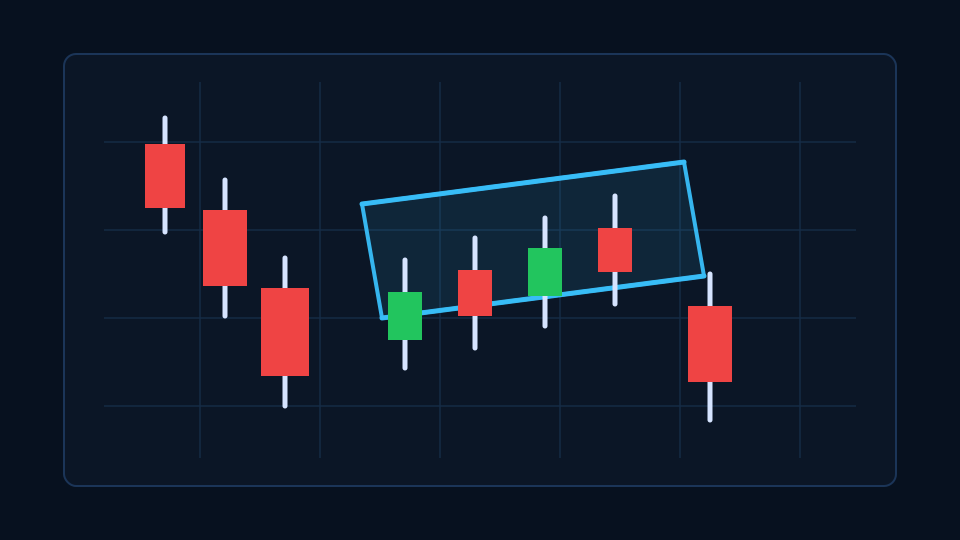
A bear flag is a pattern traders watch after a strong downward move followed by a controlled bounce or sideways pause. It can show that price is resting after selling pressure instead of fully reclaiming the prior drop.
The important part is not the name. The useful read is whether the bounce stays controlled, where resistance forms, how volume behaves, and where the structure stops making sense.
What It Is
A bear flag is a continuation-context pattern made from an initial move down, a controlled pause, and a level where the structure can hold or fail.
- A strong first move lower.
- A bounce or sideways pause after the drop.
- Lower highs or a clear resistance area inside the flag.
- Volume often cools during the pause.
- The next move needs follow-through and level review.
The pattern is easier to review when the bounce creates a clear resistance area and the lower edge of the flag is visible.
Pattern Structure
A cleaner bear flag usually has a sharp first move down, then a weak or controlled bounce. The bounce should not erase most of the drop. If price reclaims the breakdown area with strength, the bear flag read weakens.
The structure usually includes:
- A visible breakdown or selloff.
- A pause that stays below resistance.
- Lower highs or a tight channel during the bounce.
- A lower flag area where pressure may be tested.
- A reclaim area that would change the read.
Clean Vs Forced Versions
A clean bear flag has a clear first move, a controlled bounce, and a nearby area where the pattern can be reviewed as working or failing.
A forced bear flag often appears when a trader labels any small bounce after a red candle as a flag. If the bounce is wide, choppy, high volume, or reclaiming important levels, the chart may be showing a failed breakdown instead.
Context That Matters
Bear flags need broader chart context.
- Support underneath the pattern.
- Resistance created by the bounce.
- Volume on the drop and during the pause.
- Distance from the breakdown area.
- Liquidity, spread, and slippage.
- News, market context, or catalyst quality.
When It Can Mislead
Bear flags mislead when traders enter late after the easy location has passed, ignore nearby support, or keep the pattern label after price reclaims the flag area.
Example Chart Read
A stock breaks below a morning support level on rising volume, then bounces in a tight upward channel. Volume cools during the bounce. The useful read is whether resistance holds, whether support below is too close, and whether a reclaim changes the structure.
Common Mistakes
One common mistake is calling every bounce after a red move a bear flag.
Another mistake is ignoring major support directly below the pattern.
Traders also make mistakes when they enter after the breakdown is already extended.
Another mistake is missing the reclaim that changes the read.
A final mistake is using the pattern name without checking volume and liquidity.
Related Lessons
Key Takeaway
A bear flag is useful when the drop, bounce, resistance, volume, and failure area are all visible enough to review clearly.
FAQ
What is a bear flag?
A bear flag is a sharp move down followed by a controlled bounce or pause.
What makes it cleaner?
A clear first move, controlled bounce, visible resistance, volume context, and a nearby failure area.
Why do bear flags fail?
They often fail when price reclaims resistance, support holds strongly, volume shifts, or the setup is already extended.
What else should a bear flag be compared with?
Compare the flag with nearby support, resistance created by the bounce, volume during the pause, liquidity, and the reclaim area that would change the read.